Use case source
Use case selected
The selected use case is being prepared as a draft Builder template.
- Industry
- Not selected
- Function
- Not selected
- Risk
- Not selected
- Review path
- Human review required

Create a Scaled Agent
Define the outcome, accountable owner, operating boundary, data, systems, risk, controls, evidence needs, and review path before implementation begins.
Use case handoff is a draft planning input. When a resource use case is selected, Builder can use it as optional draft context.
Use case source
The selected use case is being prepared as a draft Builder template.
The Blueprint is a recommendation and intake artifact. It is not formal approval, production authorization, compliance conclusion, legal approval, security approval, Passport issuance, registry approval, or permission for an AI worker to act.
Start with a clear idea, a relevant use case, or guided conversational shaping. Every route produces a draft Blueprint and still requires human confirmation of ownership, scope, data, systems, controls, risk, and review.
Start point
The route changes how the draft begins—not the ownership, risk, evidence, and Human Review expectations.
Use the structured Builder when the AI Worker concept is known and needs purpose, scope, ownership, risk, and review details.
Select an industry or functional use case to prefill draft context. The use case is a starting point, not an approval.
Use the guided GPT when the concept still needs conversational shaping before structured Builder review.
Builder intake
Choose a starting point, then confirm the accountable owner, operating boundary, data and systems, risk tier, controls, and next review step before previewing a Blueprint.
Self-Service is the Builder path for teams that want to shape the draft themselves. A selected use case can prefill context, but the same confirmation steps still apply.
Builder prepares a draft intake artifact. It does not approve, register, authorize, or certify an AI worker.
What you get
The Blueprint organizes the business, technical, governance, evidence, and operating context needed before implementation or registration decisions.
Recommended agent type, business function, industry context, audience, autonomy level, data sensitivity, and system integration profile.
Risk tier, required governance controls, approval path, monitoring needs, escalation path, and human oversight model.
Business owner, technical owner, domain expert, service owner, risk reviewer, missing owner warnings, and the recommended next step for human review. The output can help prepare AI worker identity, ownership, scope, domain context, review paths, and evidence before a future workspace handoff.
How it works
Built for enterprise governance
Every agent should have ownership, purpose, risk tier, lifecycle posture, governance controls, monitoring expectations, and clear approval boundaries before it affects meaningful work.
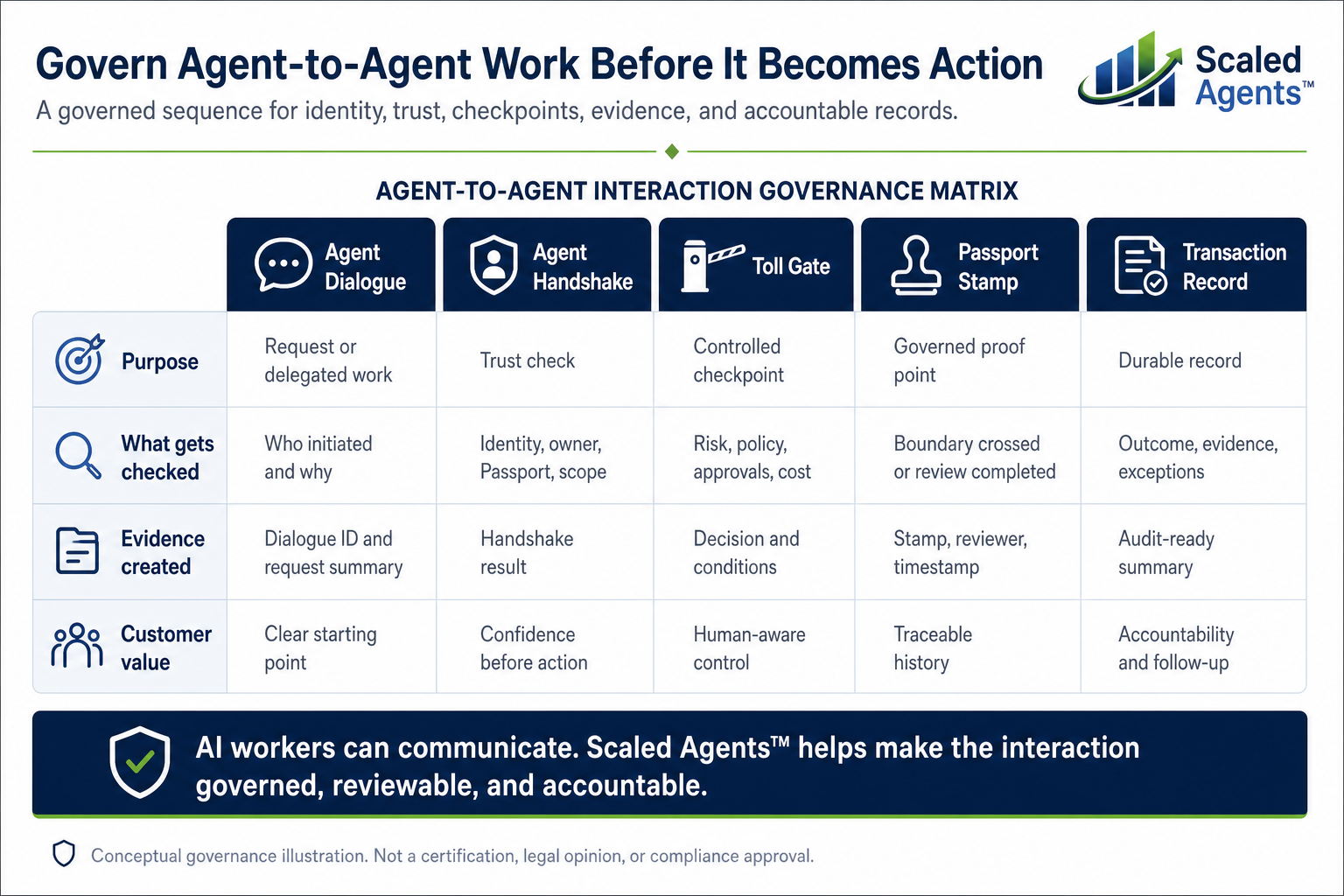
Low-risk internal productivity agents can move through lightweight review with named ownership and basic monitoring.
External-facing, autonomous, sensitive-data, financial, legal, regulated, and business-critical agents need stronger human review.
The Blueprint recommends whether to go deeper, contact Scaled Agents, or prepare for future registry or Workbench handoff.
Blueprint coverage
The Blueprint organizes the decisions needed to review an enterprise AI Worker before implementation creates hidden risk or unclear authority.
Ready to define your first governed agent?
Use this service when the agent idea is real enough to classify, but not yet ready for implementation, registration, or production authority.